
Learn engineering on a real SSL console, in a real working studio.
Sound Collective teaches studio engineering hands-on at 28 Broadway: Pro Tools from day one, an SSL AWS 948 you actually get to run, and the analog signal chain fluency you cannot learn on a laptop. Every serious studio still has analog gear. You’ll know how to use it. Most of your competition won’t.
- 28 Broadway, New York
- Small classes
- Real sessions from day one
Working engineers teach every class, in rooms built around a real console. Small groups mean your hands are on the gear, not watching someone else’s.
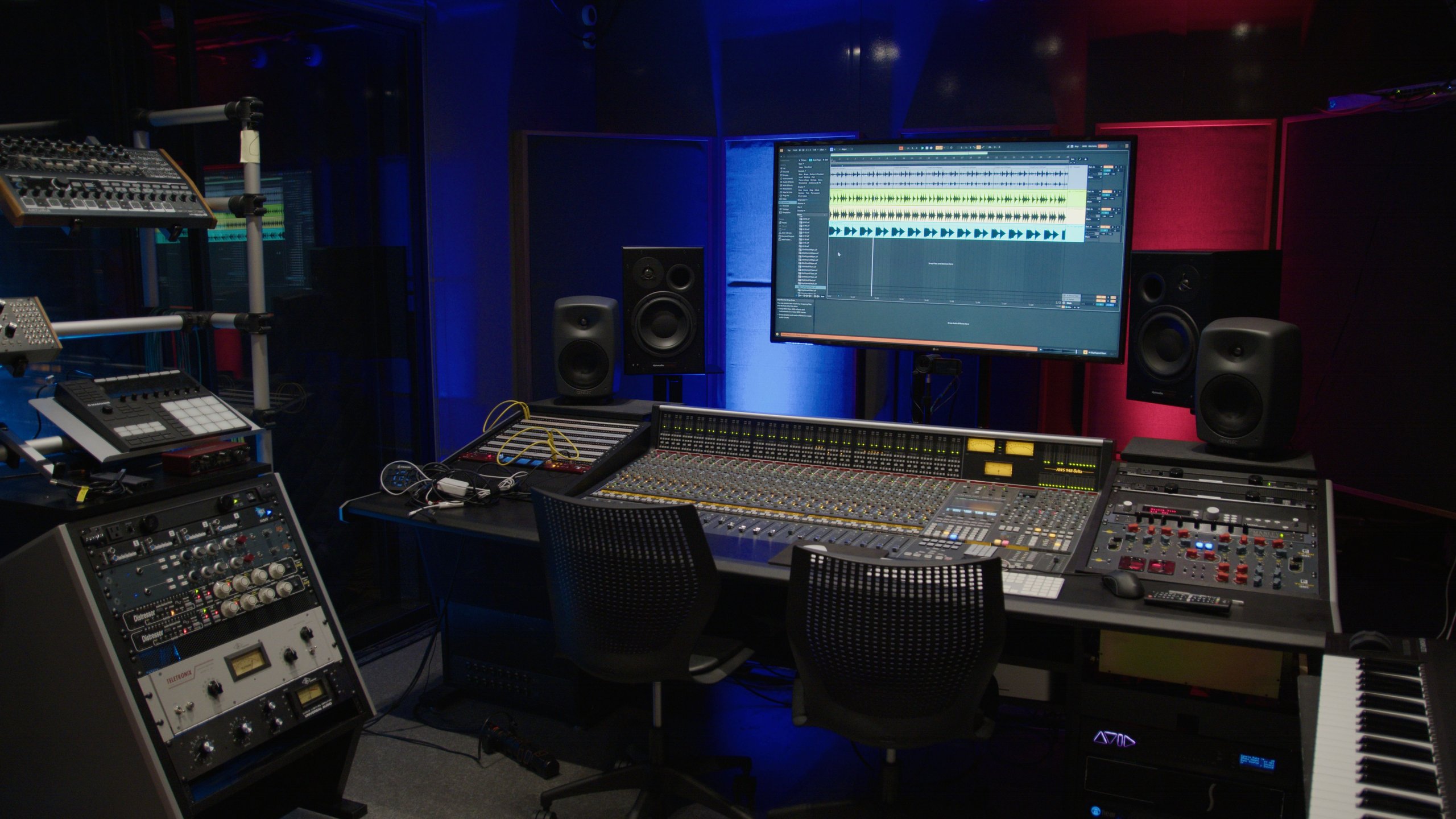
Every record needs an engineer. It’s the career on the right side of the glass: recording, mixing, and running sessions for the artists making the music.
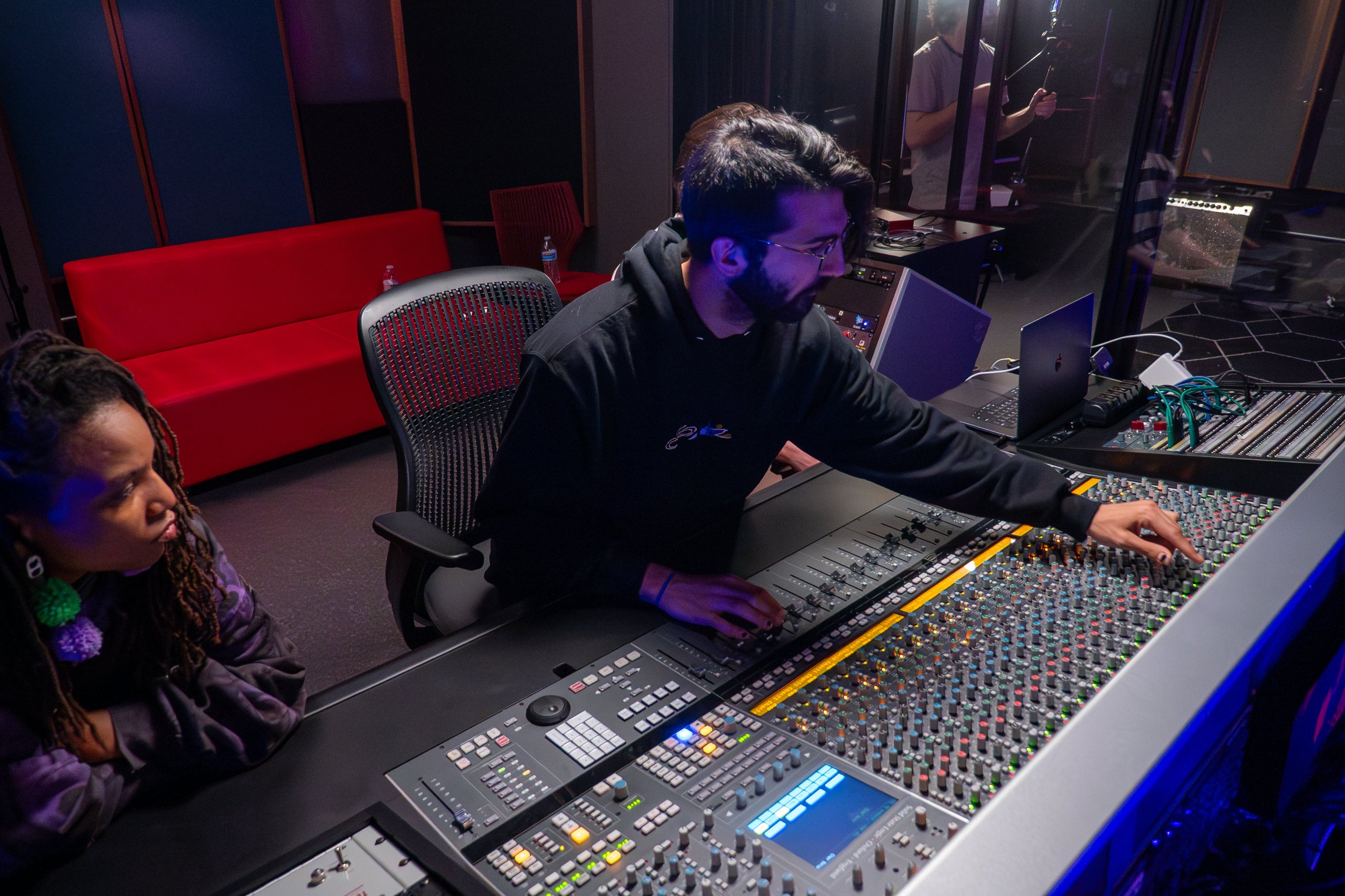
You can learn digital engineering anywhere. You cannot learn analog anywhere. Hands-on console and outboard time is the part no online course can simulate.
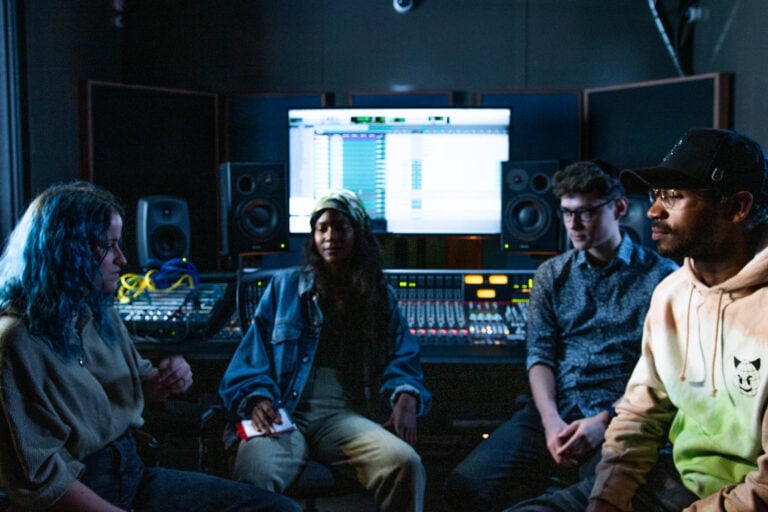
Find your starting point
Have you worked in a recording studio before?
Answer a few quick questions and we’ll show you the right place to start.
Where are you right now?
The path runs in three sections. Pick the one that sounds like you and we’ll start you there.
Which sounds more like you?
Engineering is a specific path — make sure it’s yours. Engineers and artists work in the same room but want different things. This program trains the person behind the console: the one recording, mixing, and running the session. One question tells you which door to walk through:
Not sure what an engineer actually does day to day? Read our breakdown: what a studio engineer actually does
Still torn? Talk to our team and we'll help you pick in one short conversation.
Then Music Production is your program.
Making your own tracks is a producer's path, and we built a whole program for it: Ableton or Logic training, sound design, theory, and finished music of your own. The engineering program below is still open to you, but most artists are happier on the production side.
Still torn? Talk to our team and we'll help you pick in one short conversation.
The engineering path, mapped
One path, three sections, each one building on the last. Foundations gives you the vocabulary and the instruments. Production Tools turns vocabulary into working-session capability. Specialization is the part you cannot learn anywhere else.
You can learn digital anywhere. You cannot learn analog anywhere.
Section 3 is the reason this program exists in person: hands-on time with a real analog console, real outboard compressors and EQs, and live session experience. Sections 1 and 2 build the foundation so that when you get there, you can actually use it. Every section produces something real for your portfolio.
Learn the language
Signal flow, Pro Tools, the SSL board, and the musical literacy engineers use in the room.
- Intro to Studio Engineering
- Intro to Pro Tools
- Studio Essentials: Mixing
- Music Theory for Producers
- Piano for Producers: Intro
The natural starting point. Everything after this builds on the vocabulary you pick up here.
Run real sessions
Deeper on the console and signal chain, plus digital engineering, mastering, and the business.
- Intermediate Studio Engineering
- DAW Choice: Ableton or Logic
- Digital Engineering
- Studio Essentials: Mastering
- Music Business Essentials
By the end, you can work as an entry-level engineer with credible tool fluency.
The differentiator
The section that separates this program from any online or budget alternative.
- Analog Engineering
- Creative Recording Techniques
- Studio Essentials: Ear Training
Analog fluency, creative recording, and the listening discipline that separates good engineers from great ones.
Take the sections in order. Where you start depends on your experience — answer the two questions above and we’ll point you at the right first class.
What you'll actually study
Three sections, taught in sequence. Start at Section 1 — each one builds on the last.
Start here Section 1 · Foundations Learn the language
Signal flow, Pro Tools, the SSL board, and the musical literacy engineers use in the room. The natural starting point — everything after this builds on the vocabulary you pick up here.
Taught by [Instructor Name] · working engineer with studio credits
- 1 Intro to Studio Engineering. Audio fundamentals, mics, signal flow, and the SSL AWS 948 console workflow
- 2 Intro to Pro Tools. The software every professional studio runs on, from session setup to delivery
- 3 Studio Essentials: Mixing. Take a mix from rough to release-ready
- 4 Music Theory for Producers. Musical literacy that gets you further with artists
- 5 Piano for Producers: Intro. Play ideas instead of drawing them in, for faster, more musical sessions
Start here Section 2 · Production Tools Become useful in the room
Deeper on the SSL board and signal chain, DAW fluency, digital engineering, mastering, and the business side. By the end, you can work as an entry-level engineer.
Taught by [Instructor Name] · working engineer
- 1 Intermediate Studio Engineering. Run sessions on the AWS 948 and control Pro Tools from the desk
- 2 Intro to Ableton Live / Logic Pro. The DAW literacy every engineer needs
- 3 Digital Engineering. Mix in-the-box at a professional level
- 4 Studio Essentials: Mastering. Finalize and deliver tracks to professional standards
- 5 Music Business Essentials. Understand where revenue flows and how to get paid
Start here Section 3 · Specialization The part you can't learn online
The section that separates this program from any online or budget alternative. Analog fluency, creative recording, and the listening discipline that separates good engineers from great ones.
Taught by [Instructor Name] · working analog engineer with named records
- 1 Analog Engineering. Optical, vari-mu, FET, and VCA compressors, SSL channel strips, hybrid routing into Pro Tools
- 2 Creative Recording Techniques. Add creative sound design to your technical fluency
- 3 Studio Essentials: Ear Training. The listening discipline that keeps developing when every other skill plateaus
You leave each section with something for your portfolio — not just notes. Section 3 is the reason this program exists in person.